
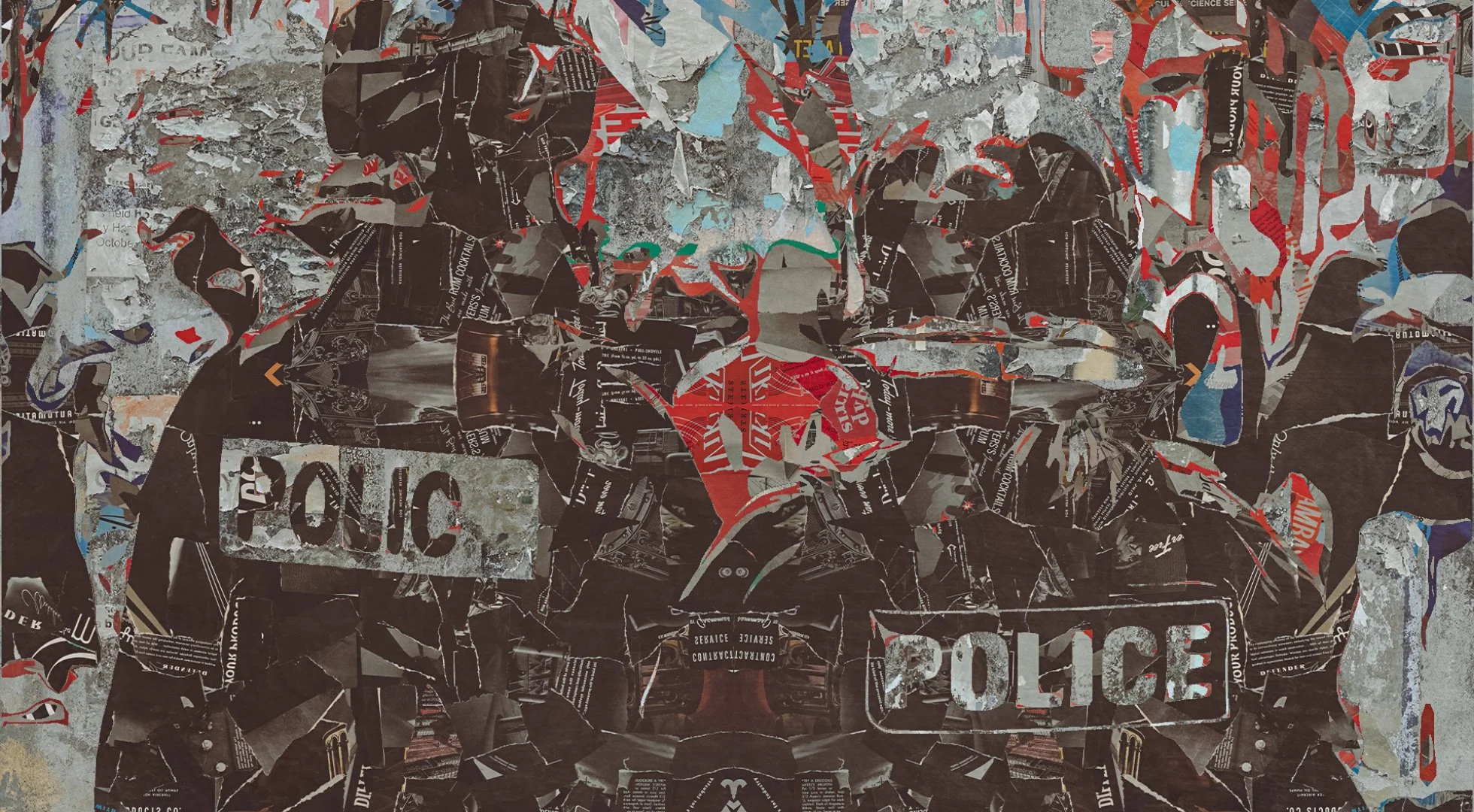
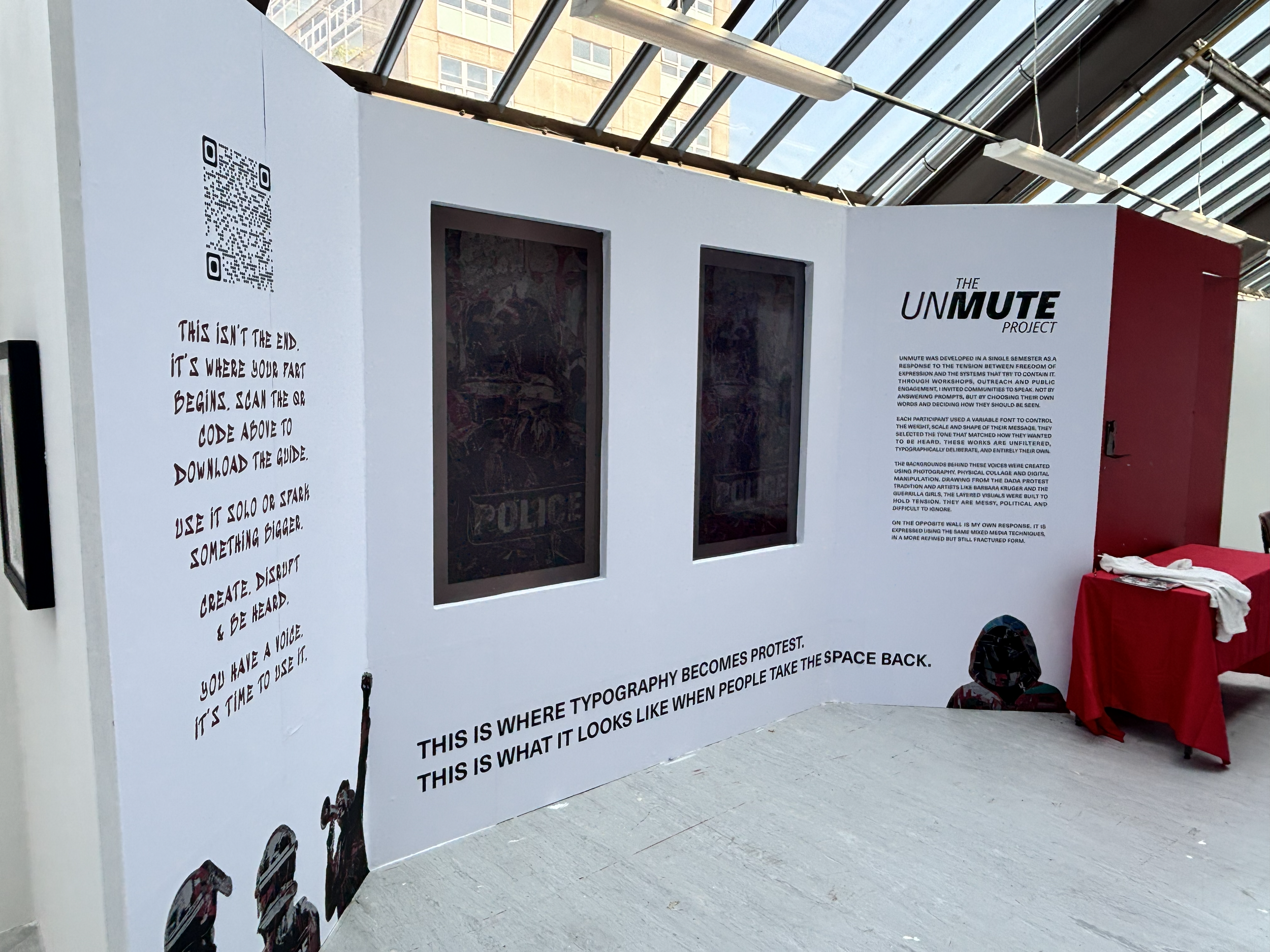
The Unmute Project is a Fine Art and visual communication project about voice, silence and being heard. It uses typography, participant statements, moving image, print, installation and exhibition presentation to transform private or muted expression into public-facing visual outcomes.
Project Overview
The Unmute Project developed into a body of work built around voice, silence and public expression.
The project combines self-directed visual interpretation with material generated from participants' voices. It uses typography, moving image, print, installation and exhibition presentation to explore what happens when private thoughts, suppressed statements or unheard experiences are made visible.
The work does not present silence as empty. It treats silence as something shaped by pressure, fear, control, identity and context. Through direct language, visual disruption and public-facing presentation, Unmute turns withheld expression into visible creative outcomes.
Origin
& Pivot
The project began with the full stop as a typographic symbol of finality, silence and attention. Through research and development, it evolved into the Unmute Project.
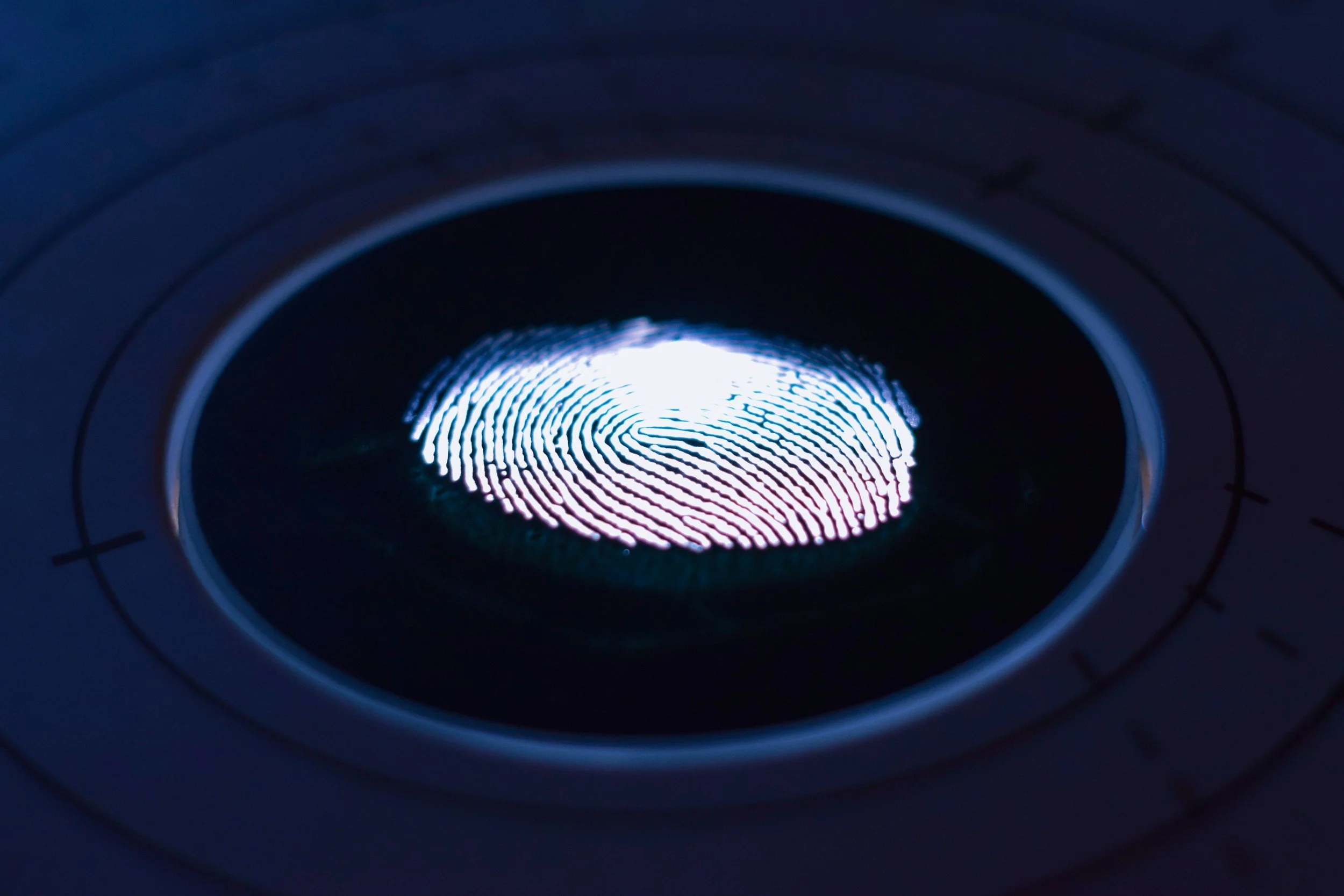
Early research tested fingerprint imagery as a metaphor for identity and individual voice. Audience feedback challenged that reading, associating fingerprints with surveillance and coercion. Rather than defend the original concept, I removed it and redirected the project towards participation, typography and self-authored messages.
Workshop Voices
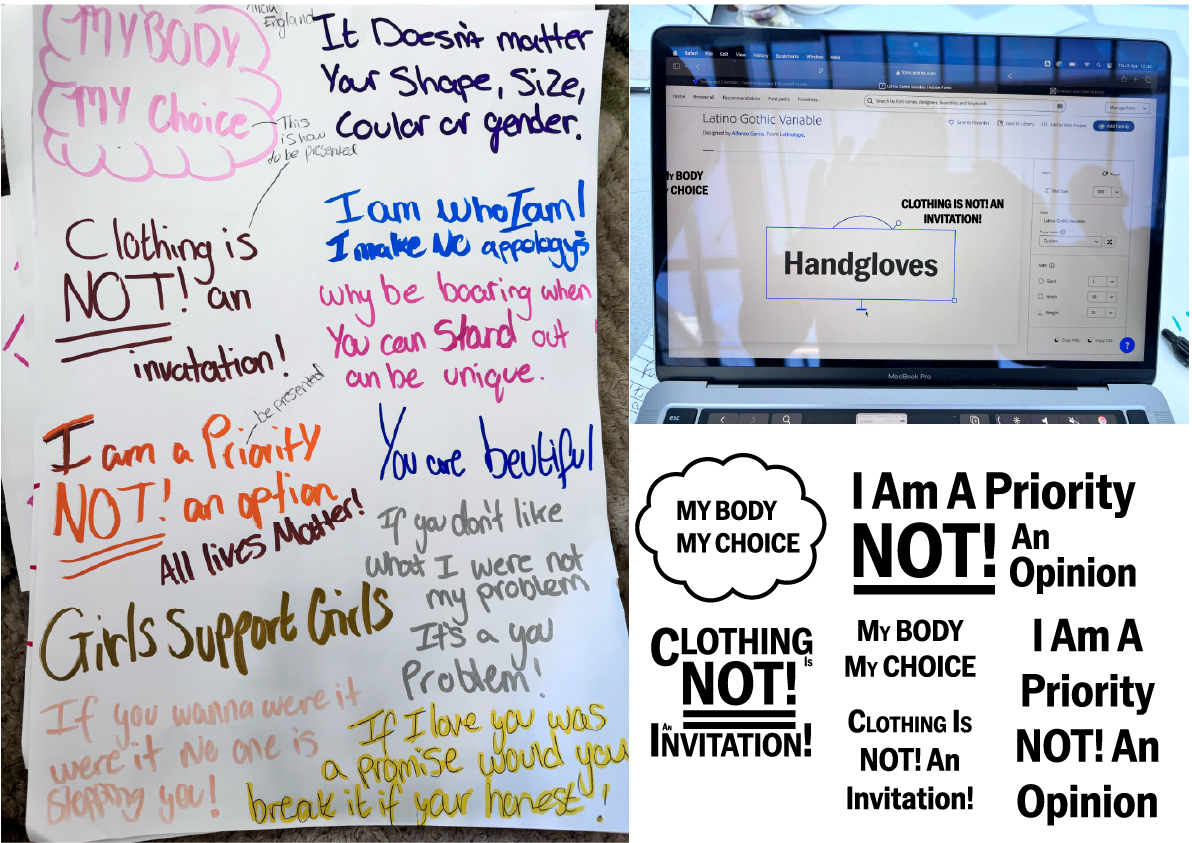
The workshop element asked participants to speak from the mind and give visual form to their own words.
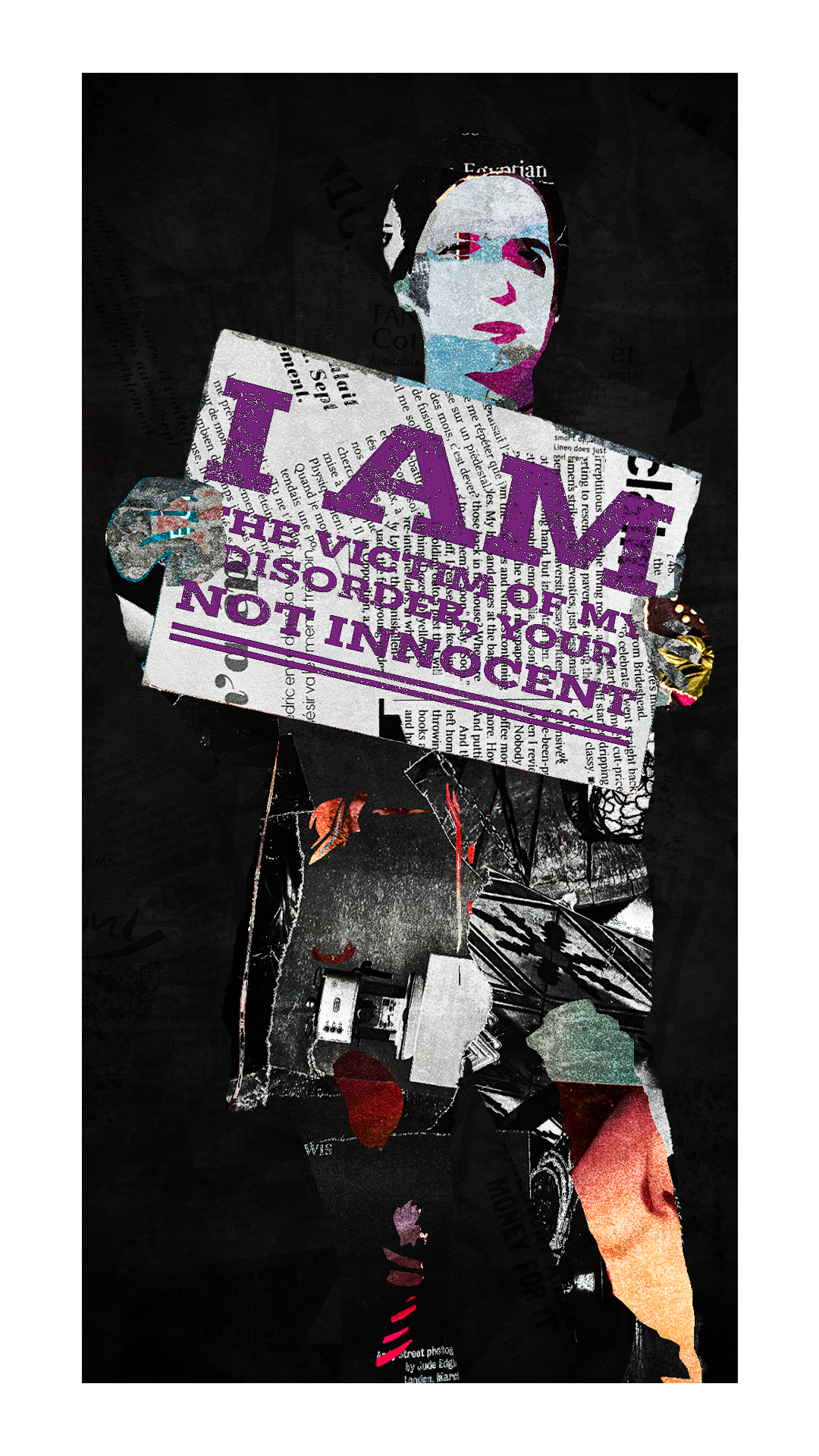
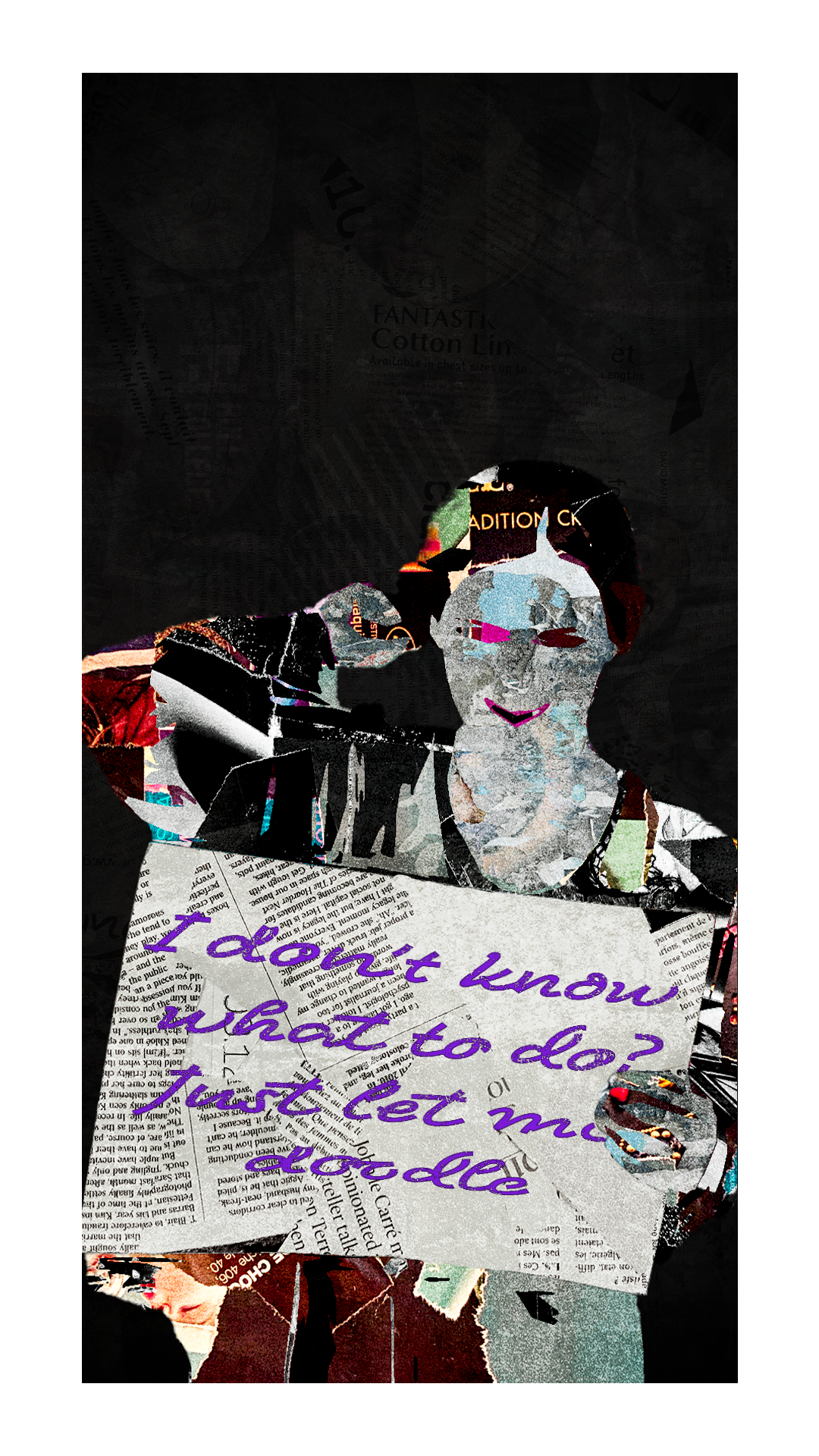
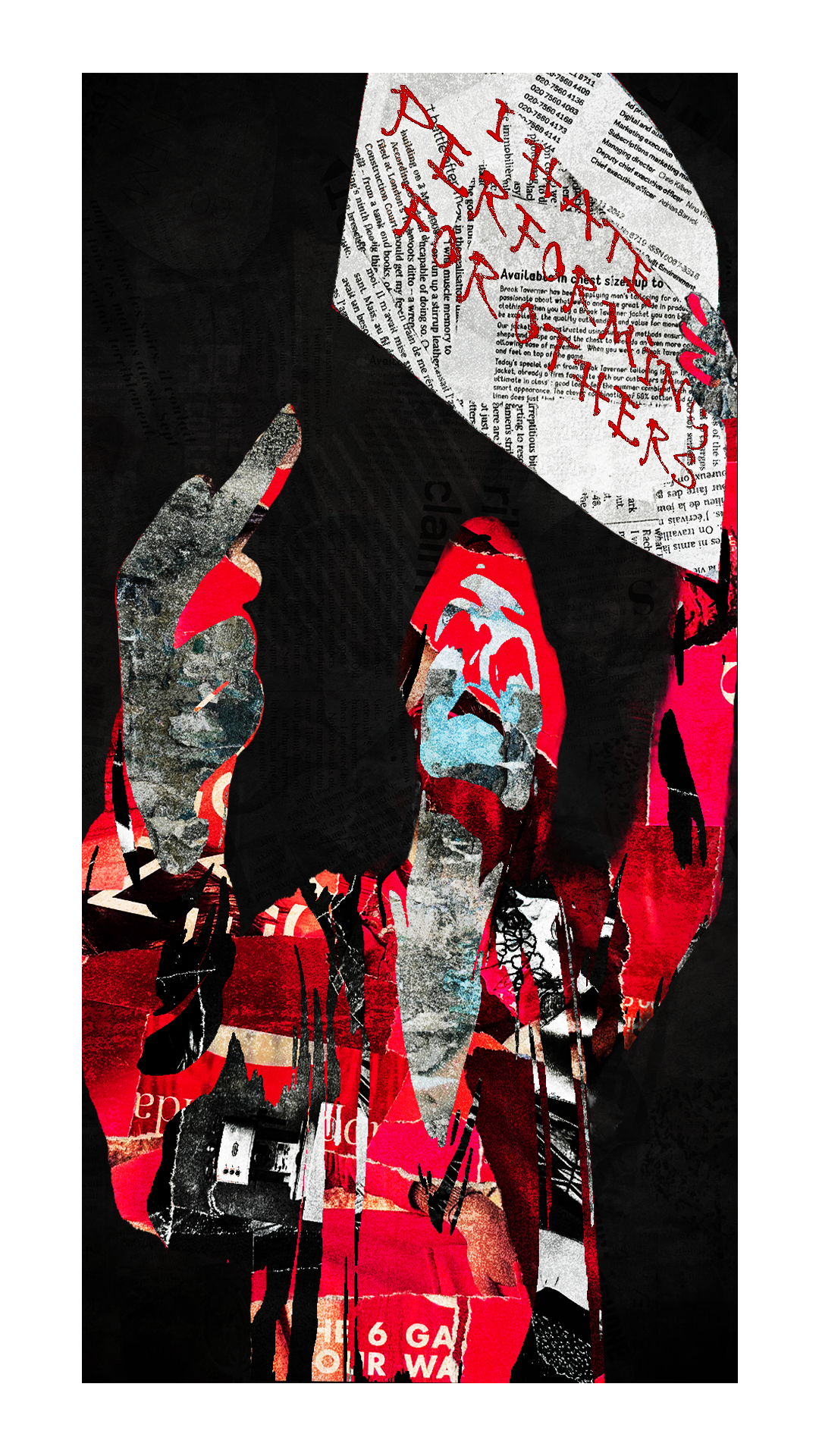
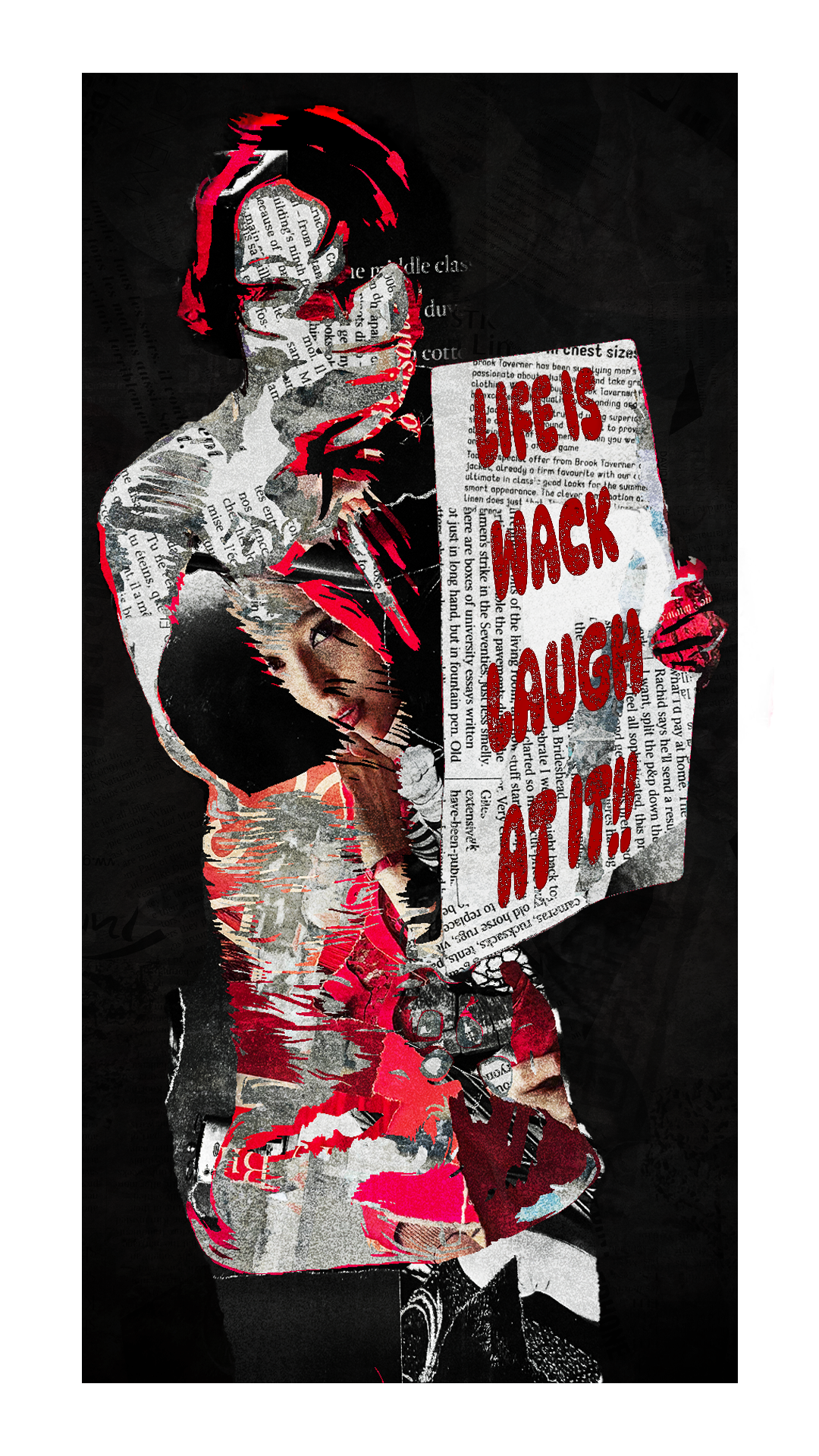
They wrote statements, thoughts or phrases they wanted to express, then hand-rendered them using symbolism, shape, pressure, distortion and scale to show how the message should feel. The aim was not clean handwriting or finished typography. It was visual voice.
Participants also experimented with variable font technology through Adobe tools, adjusting typographic properties such as weight, width and slant to create personalised font variants. This allowed their words to move beyond standard text and become more closely connected to tone, identity and intention.
The workshop became one of the clearest expressions of Unmute: their words, written their way.
Workshop Output
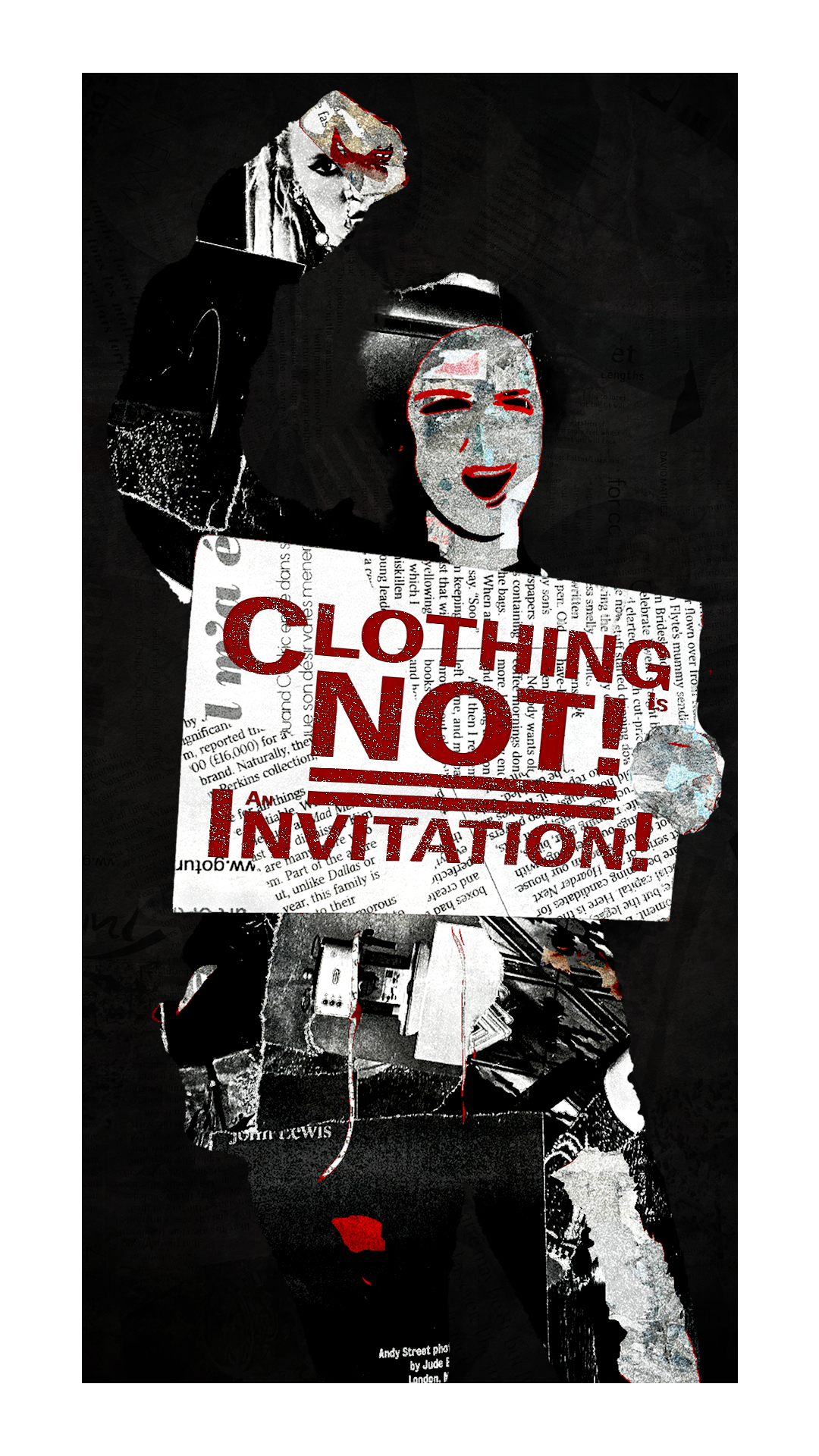
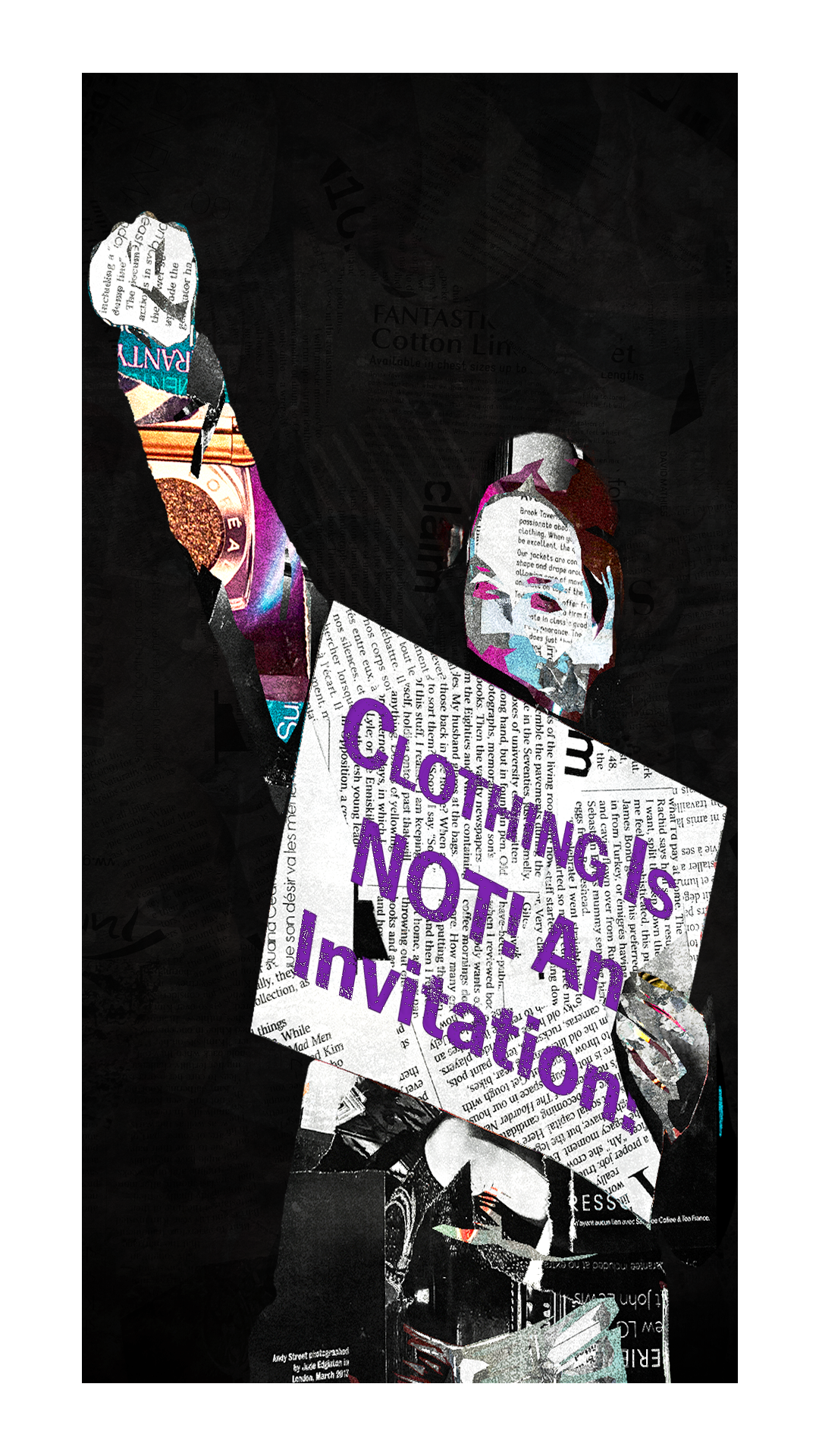
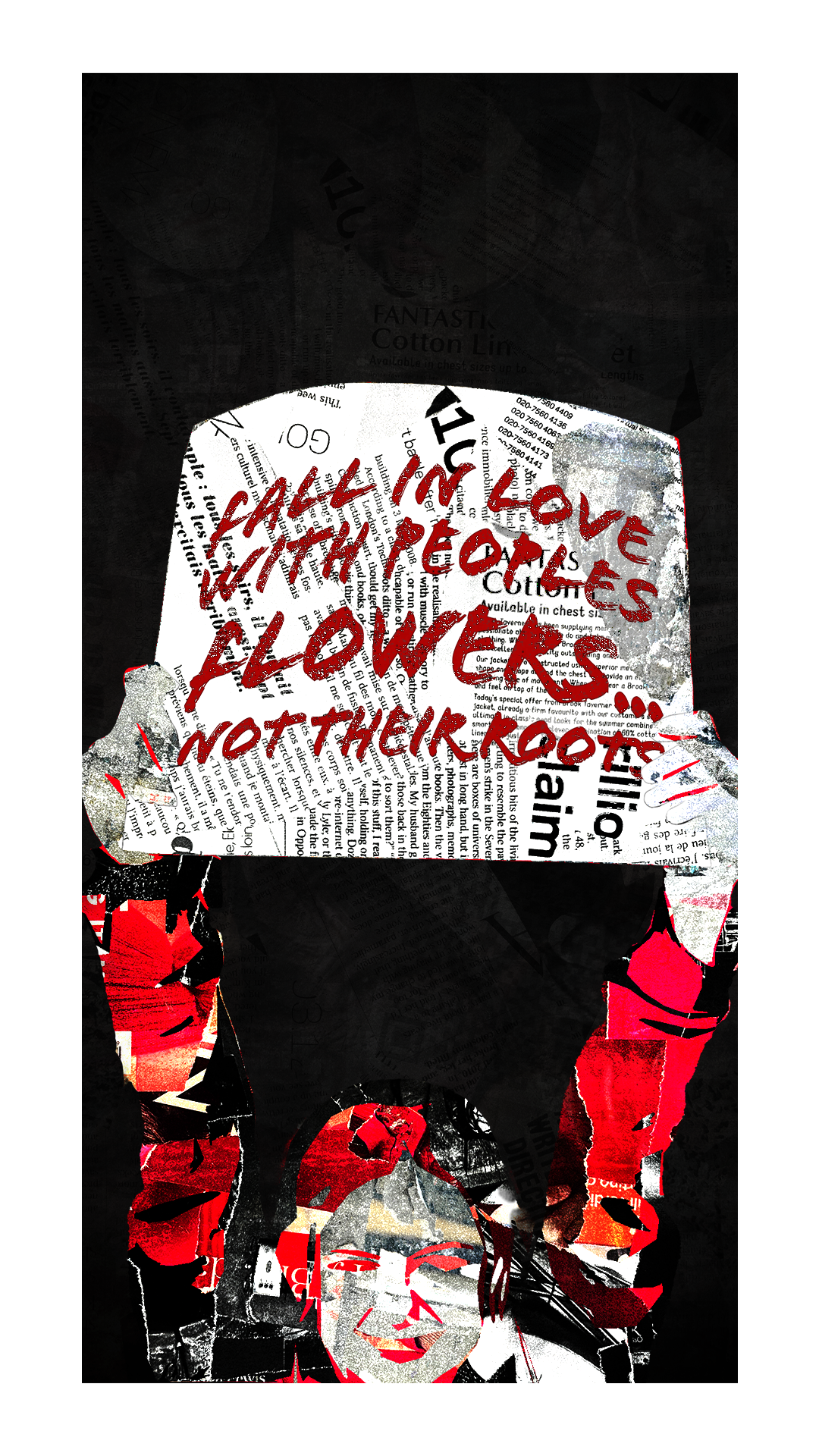
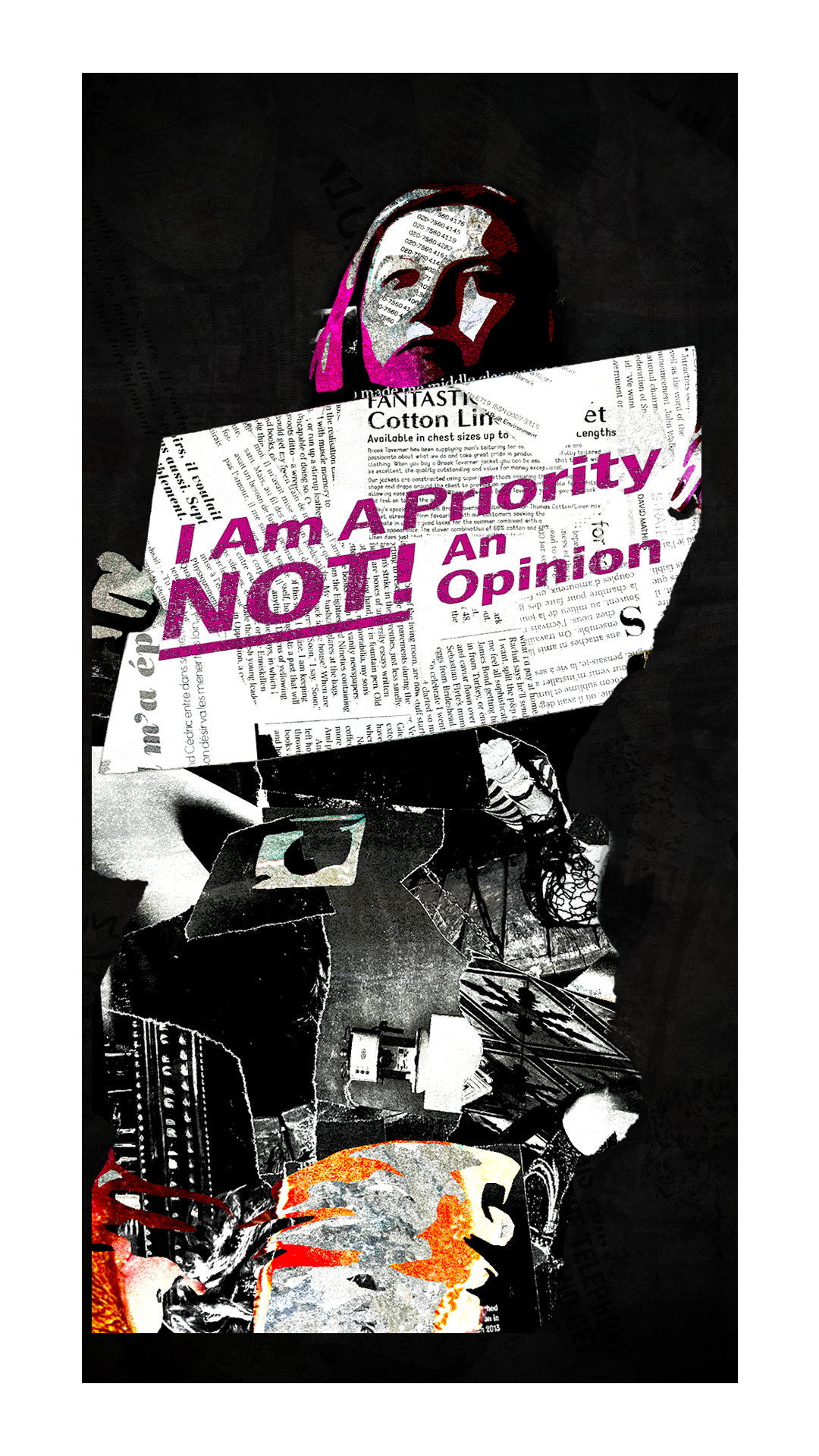
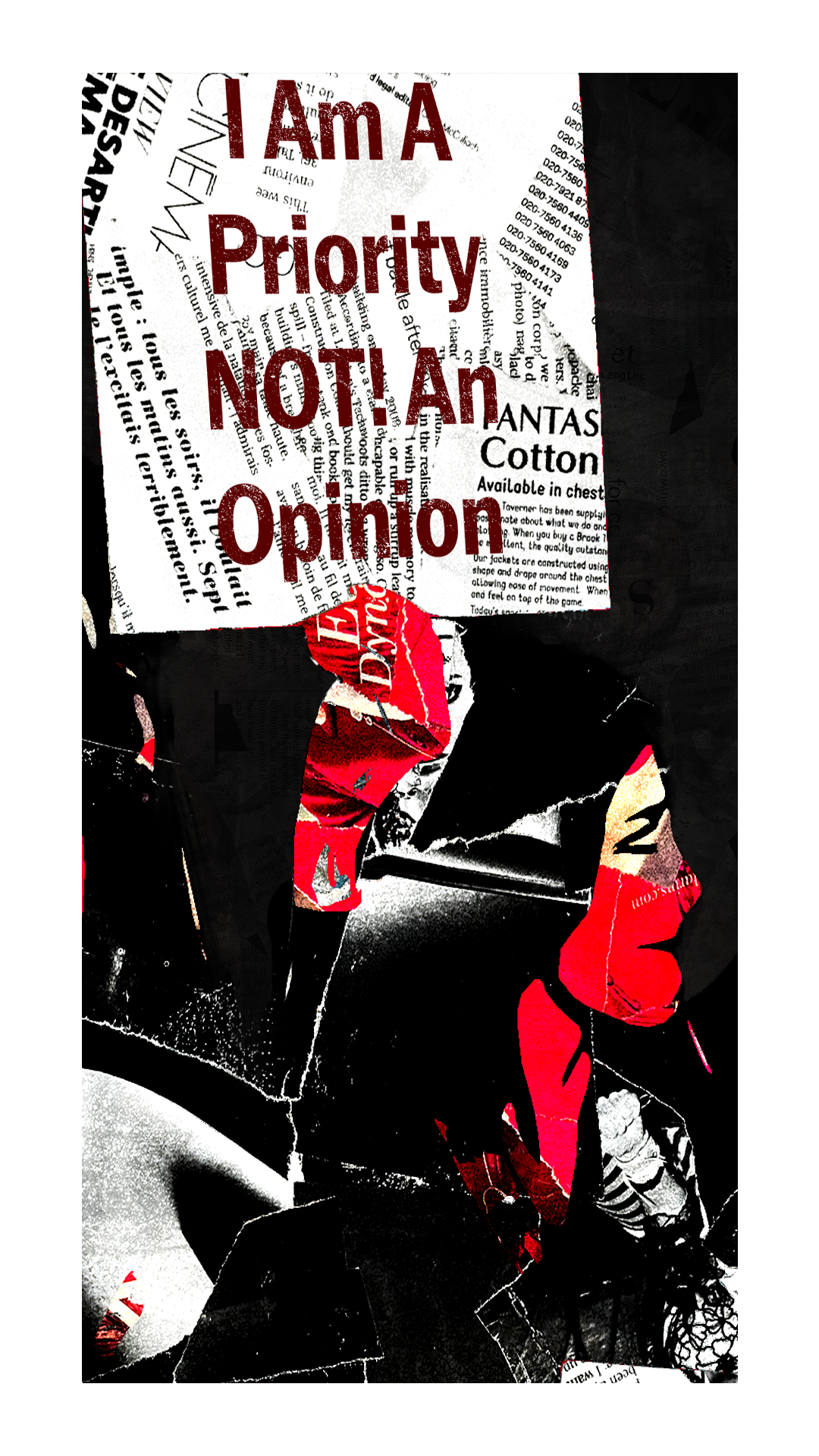
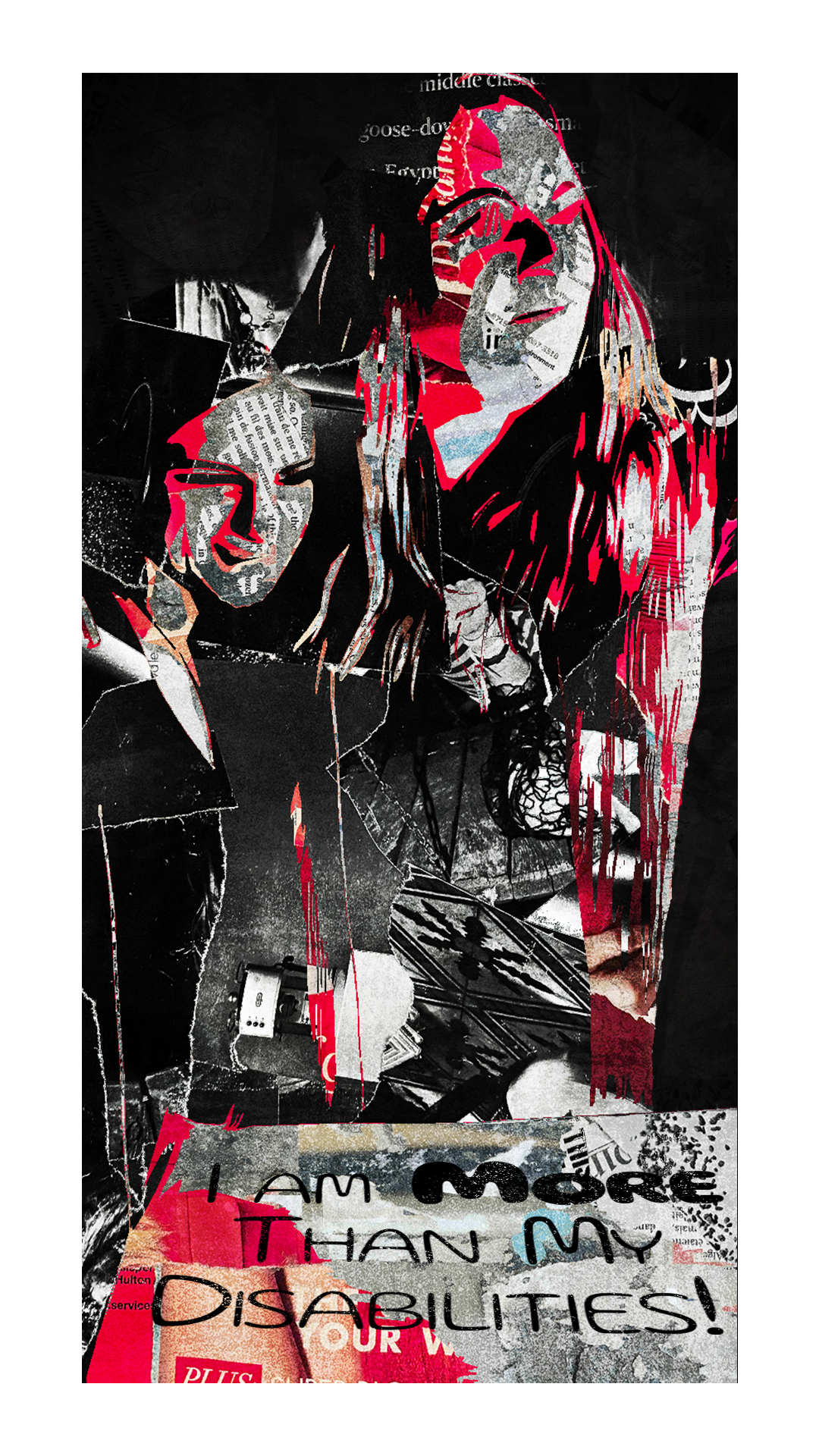
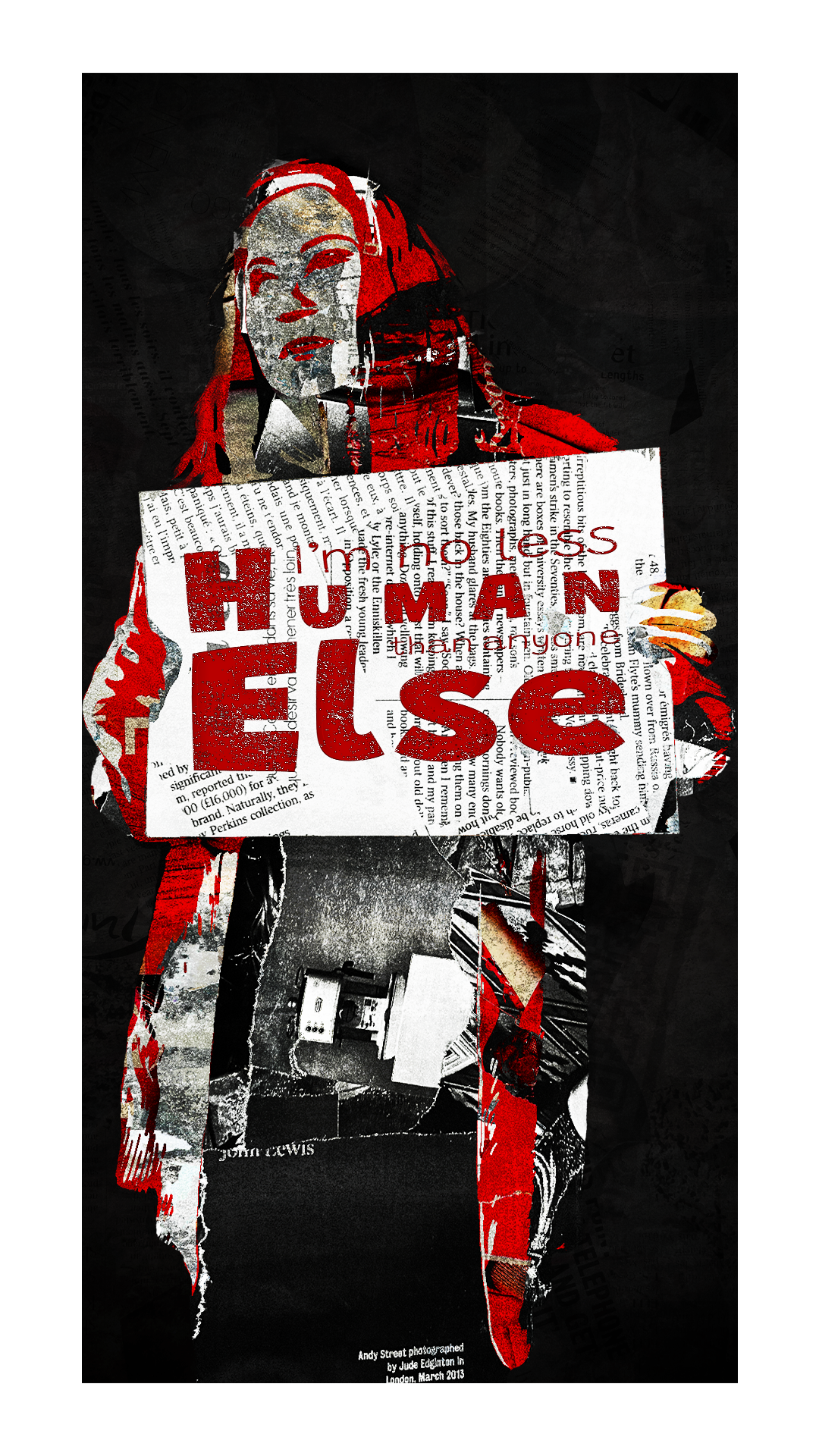
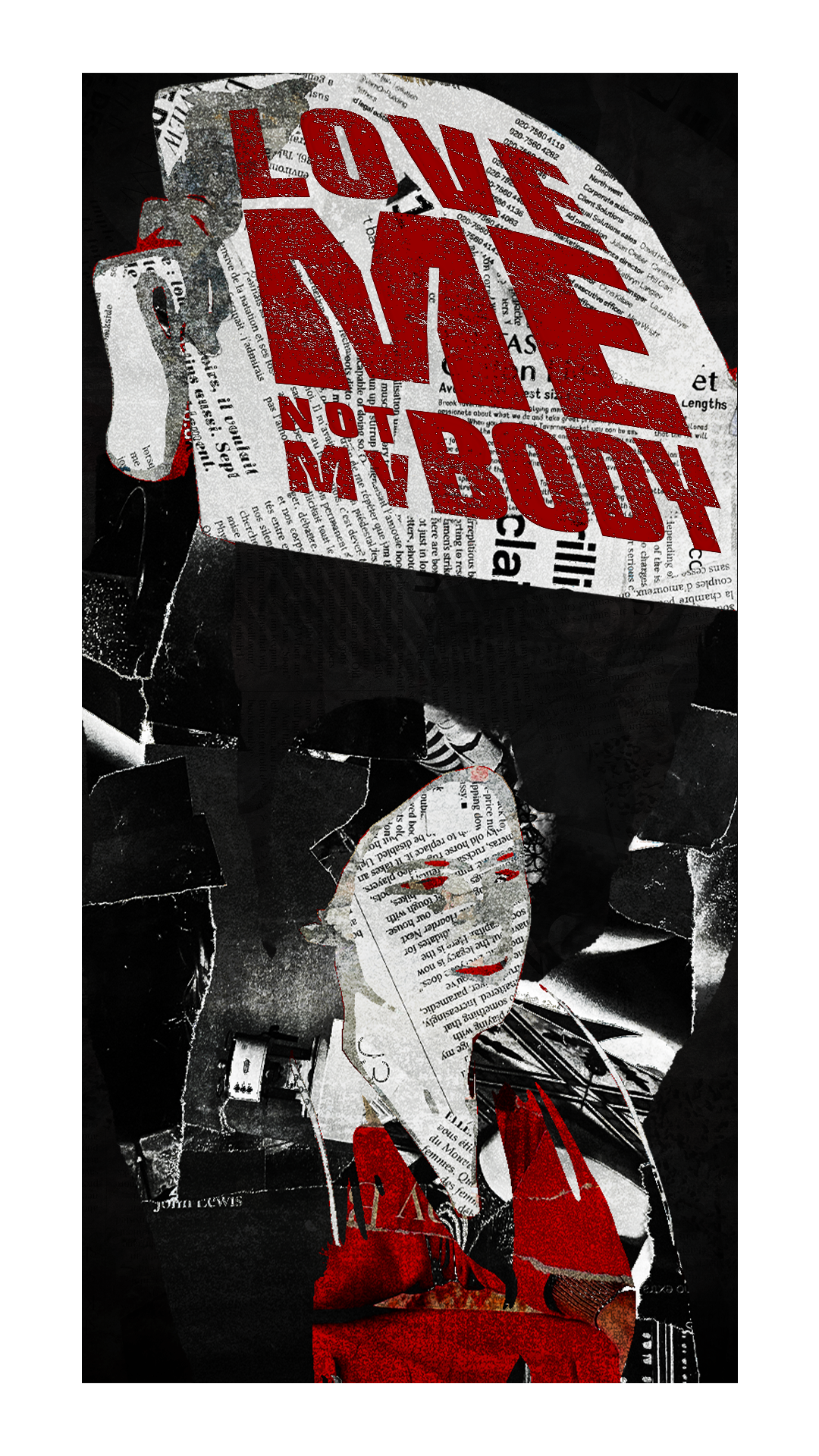
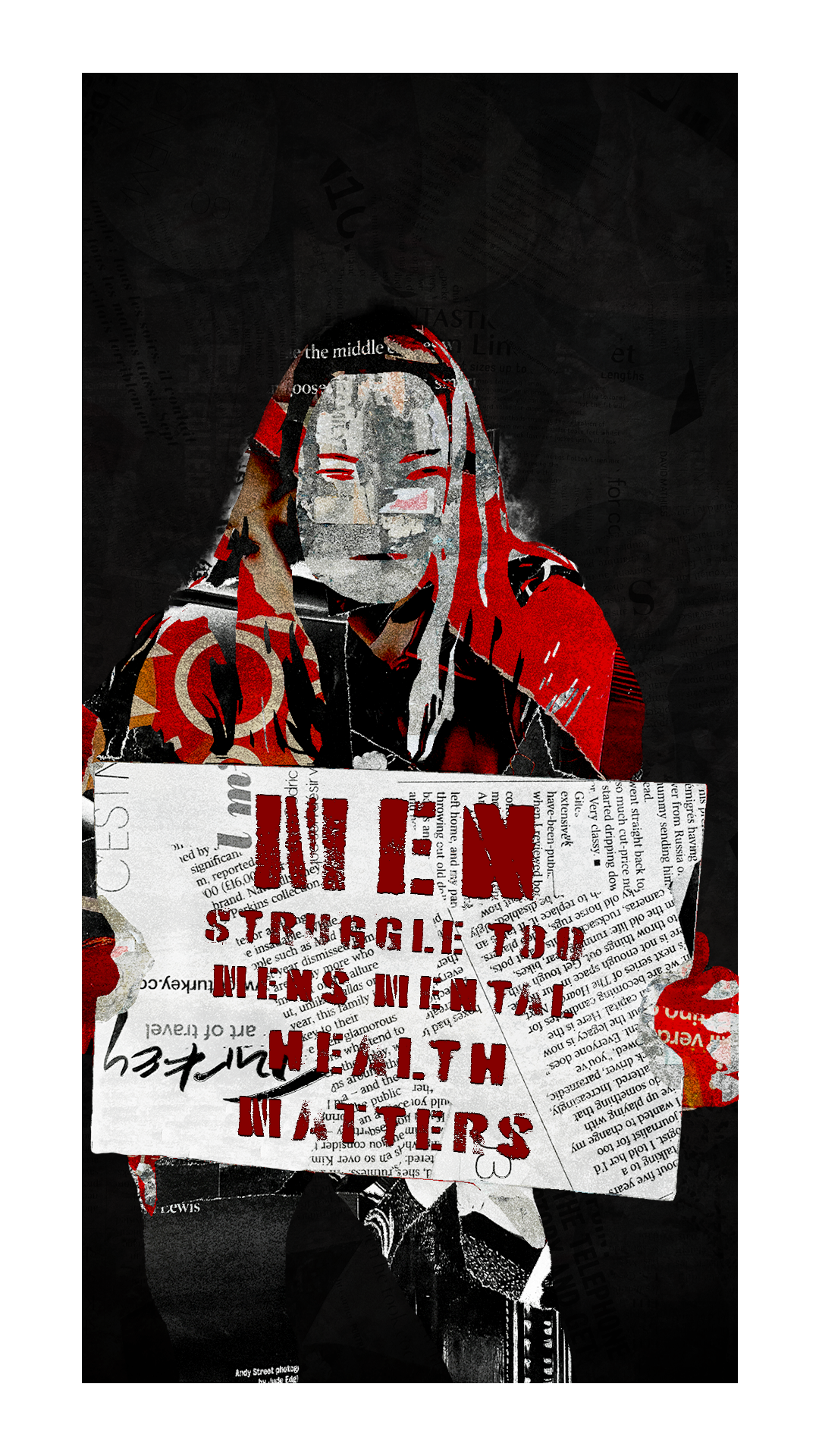
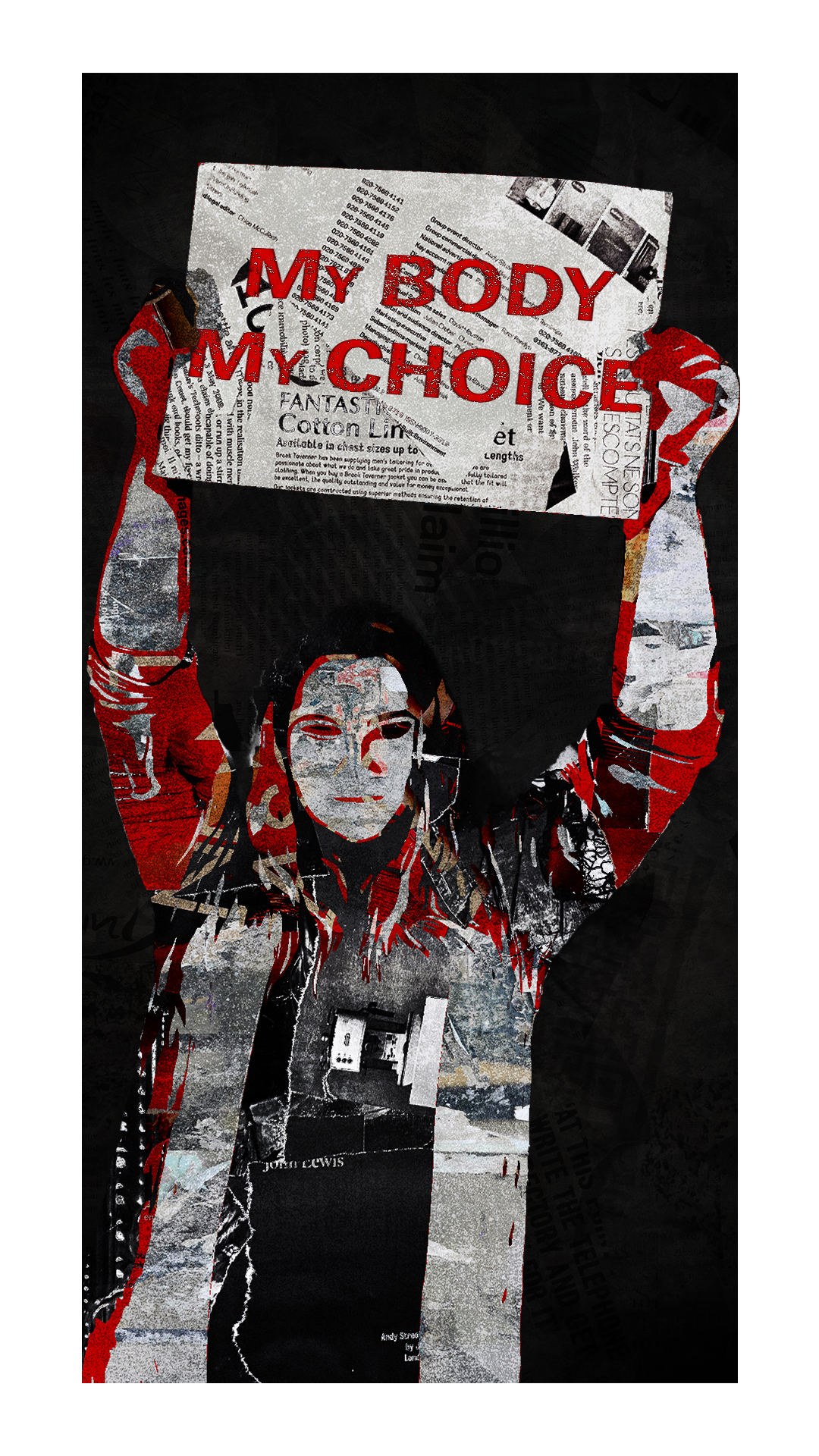
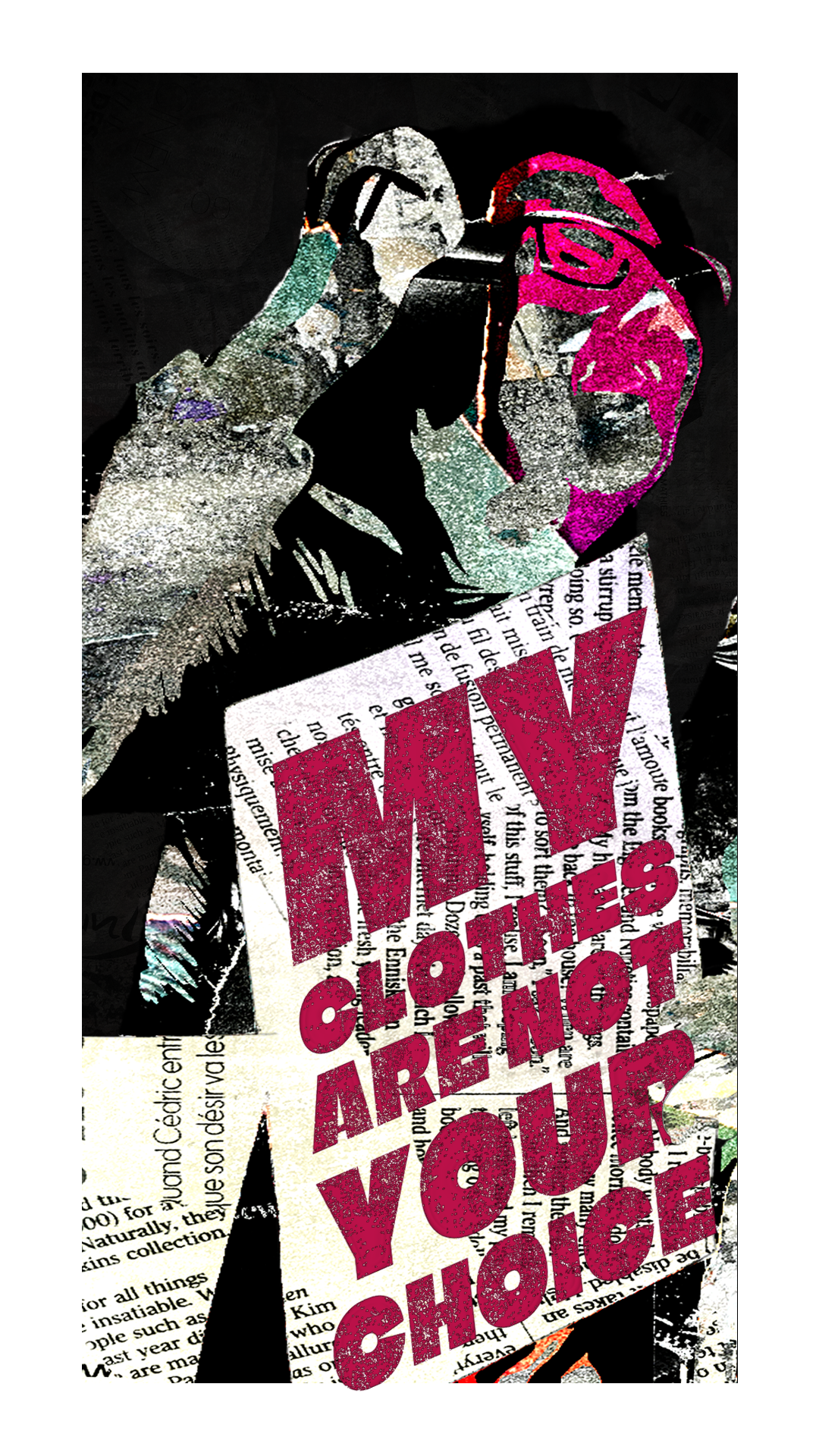
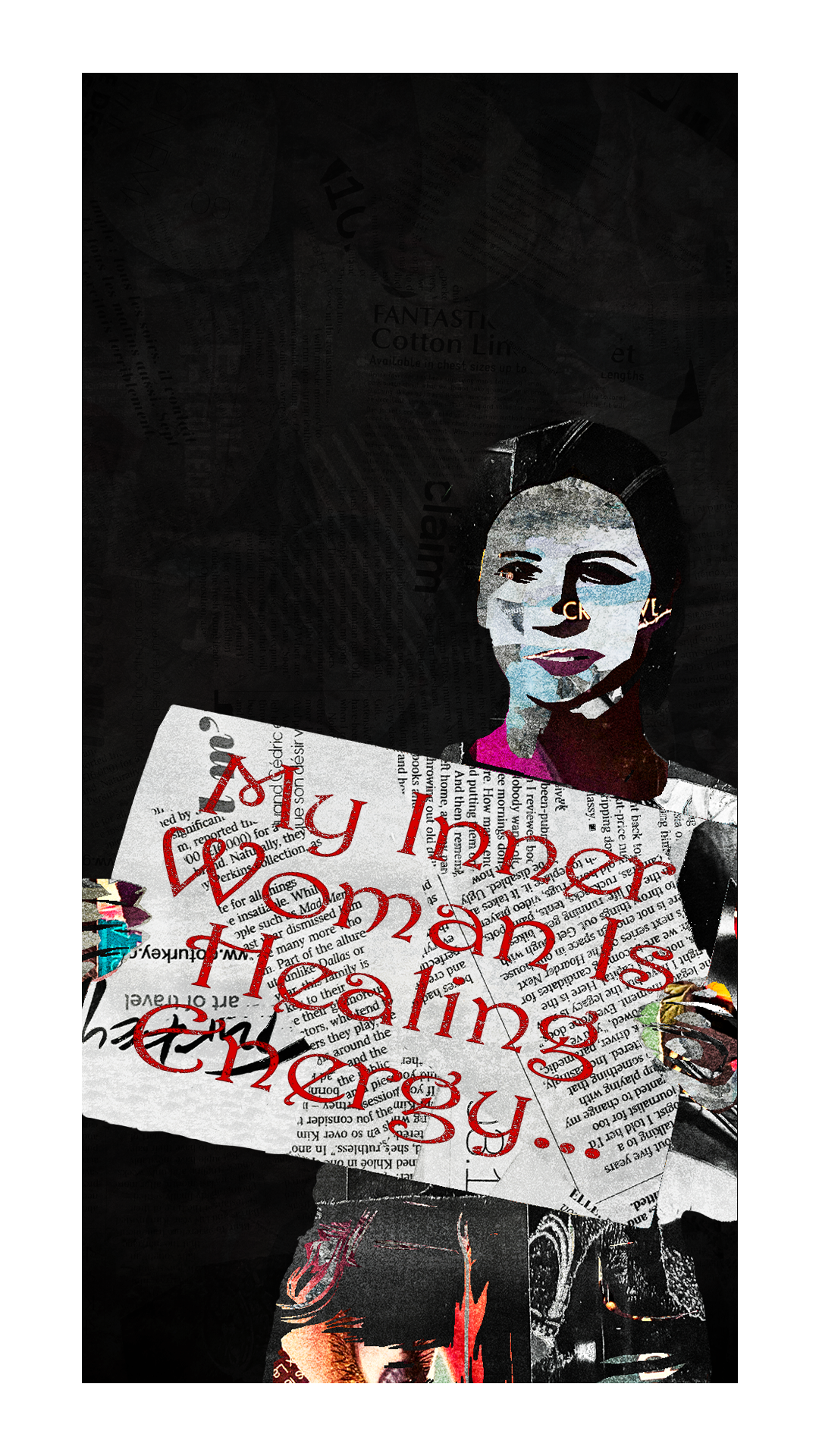
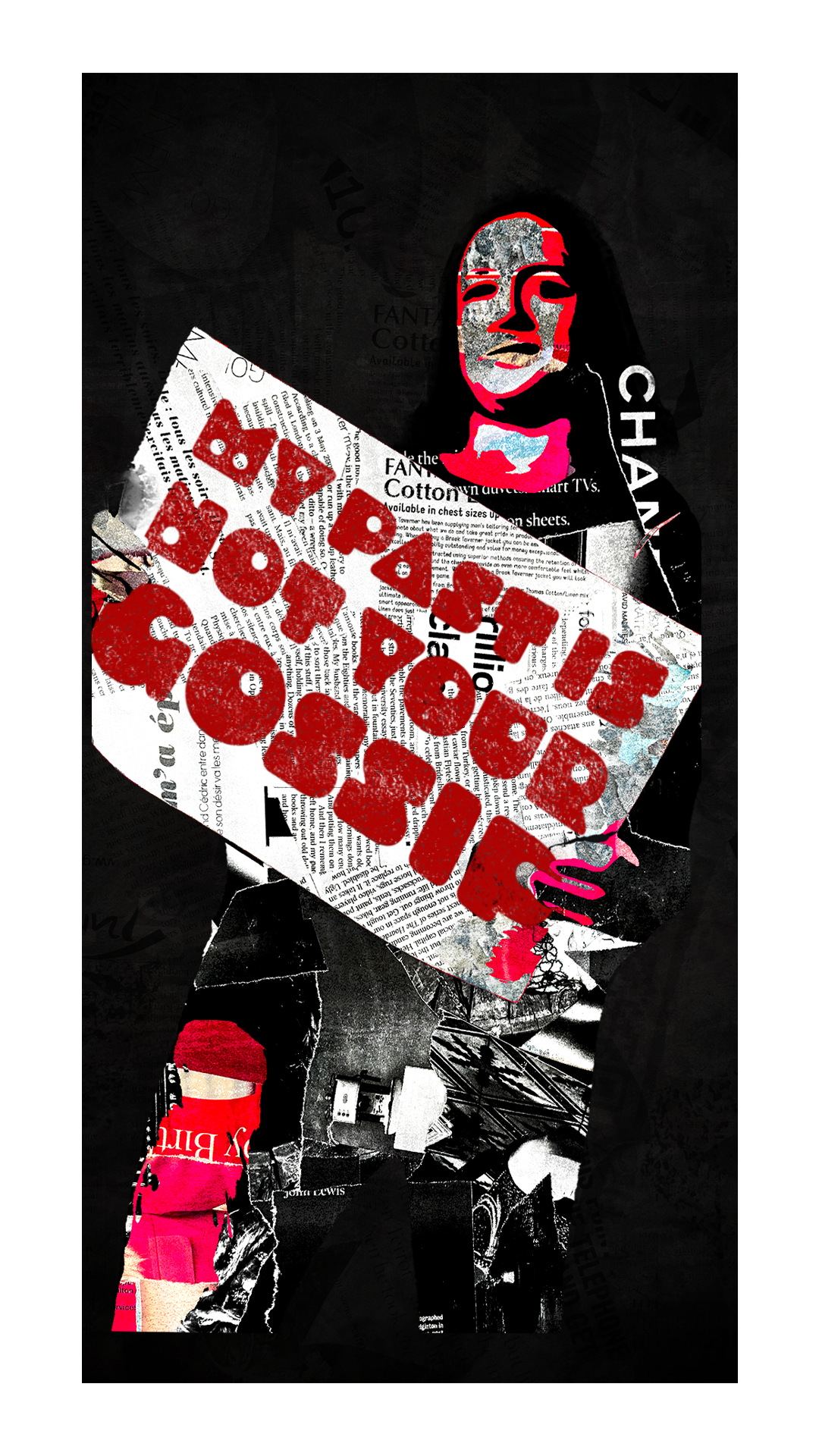
This body of work was originally developed as a moving-image sequence for exhibition presentation.
The participant-led typographic pieces were exported as vertical stills, framed with a white border to maintain a consistent visual system. This created consistency across the sequence while preserving the individuality of each voice, statement and visual treatment.
Selected frames from the sequence are shown below.
Visual Responses
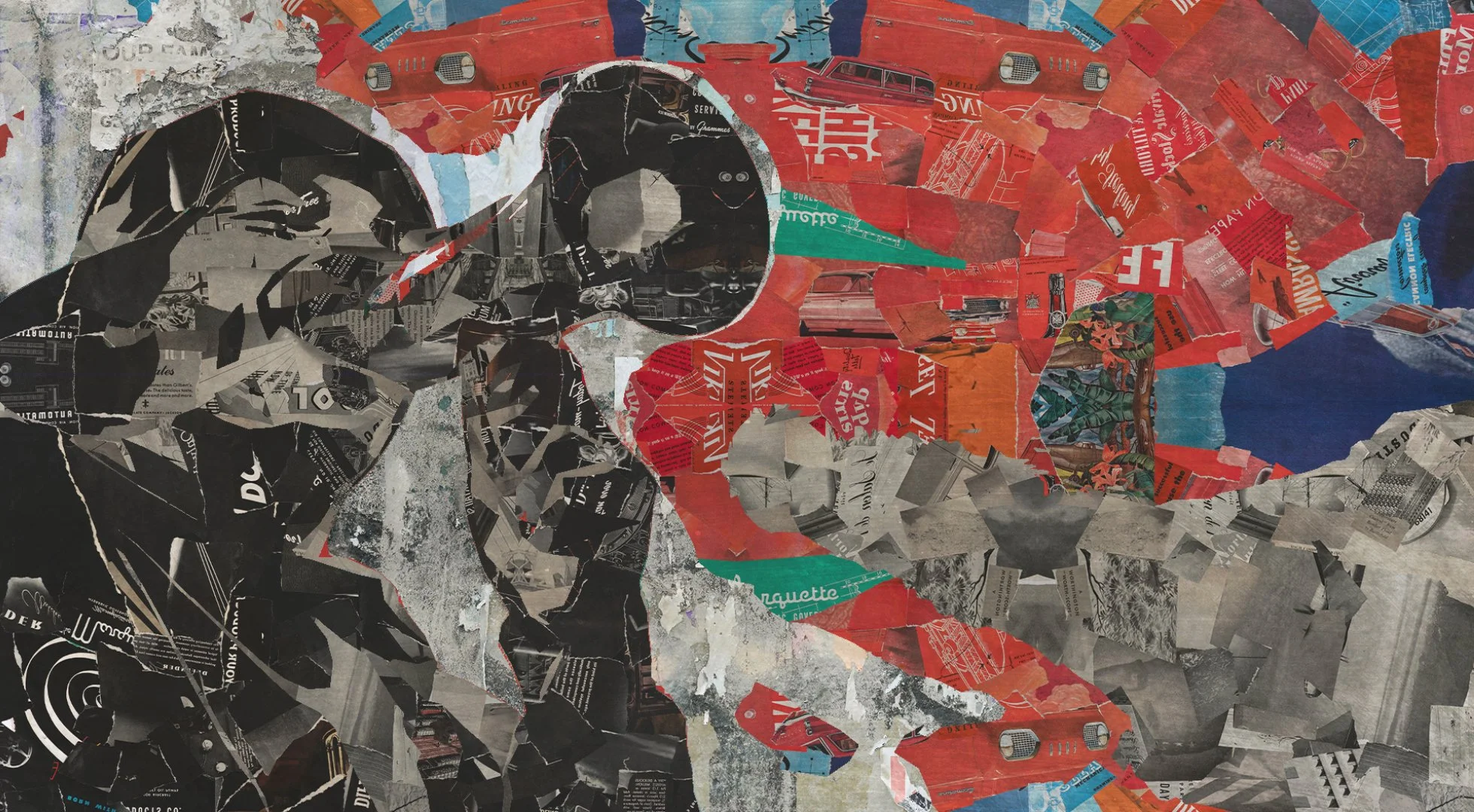
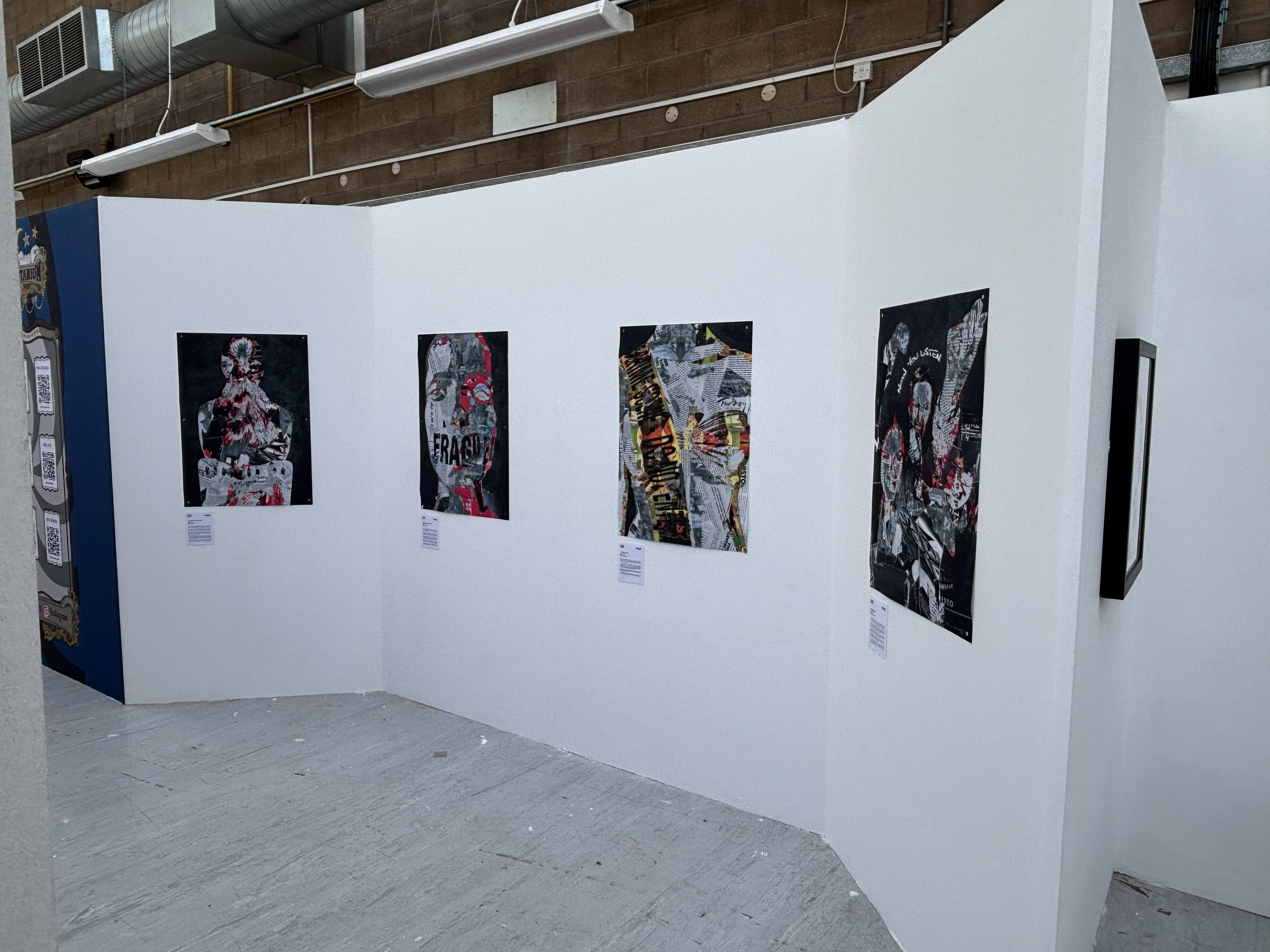
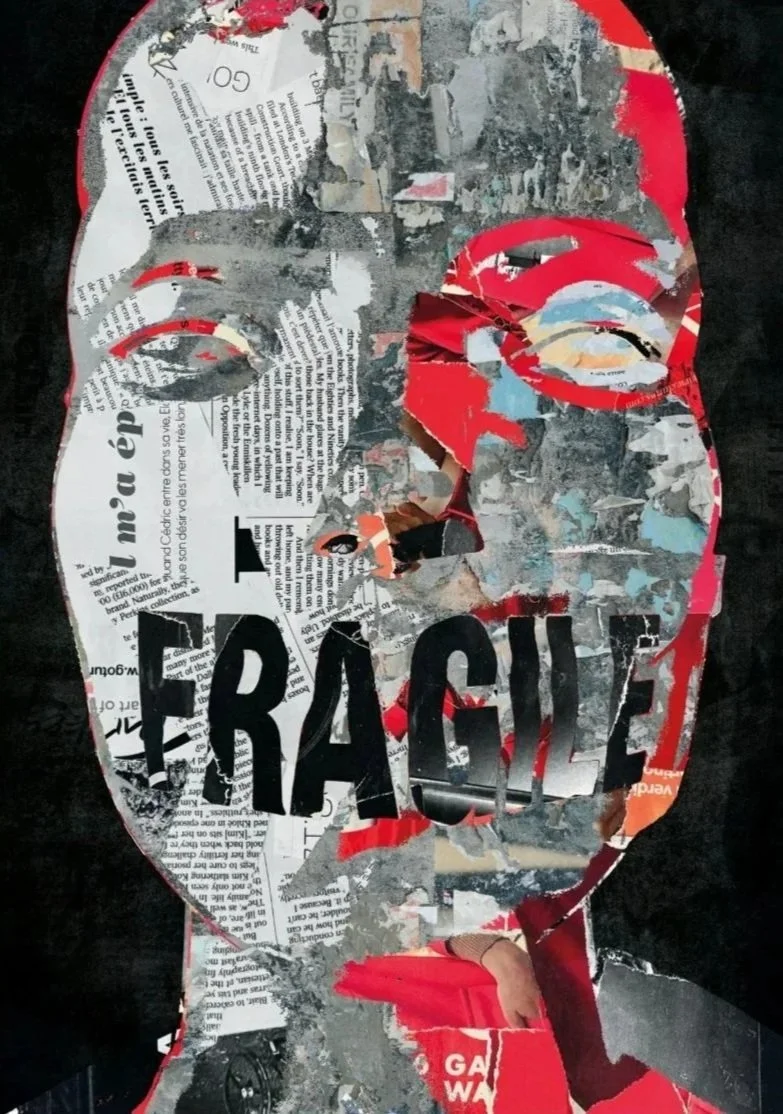
The final four visual responses were developed from the workshop voices, but they are my own interpretations of the project’s themes.
I created the work through a process of photography, scanned collage, structured posterisation, variable font editing and manual layer blending. The collage language draws on Dada and protest art, but the final system developed through my own material process: ripped source material, self-produced photography, texture files, layered compositions and controlled typographic treatment.
These pieces were not designed to be clean or decorative. They were built to hold contradiction, pressure and emotional weight. Each response takes a different theme from the project and gives it a visual form through image, text, texture, scale and tone.
-
![A mixed media collage with torn newspaper and magazine clippings forming a portrait of a person's face, with the word 'FRAGILE' overlaid in bold black letters.]()
Fragile / Loud Minds, Fragile Voices
This response explores the tension between internal intensity and outward vulnerability.
The piece uses visual contrast, layered texture and typographic treatment to hold fragility without making it quiet. It presents voice as something that may be strained, interrupted or difficult to release, but still present and demanding recognition.
-
![Collage of a person with a long beard made from torn magazine and newspaper pieces, holding a mug with the text "Just Looking At Me." The background is black.]()
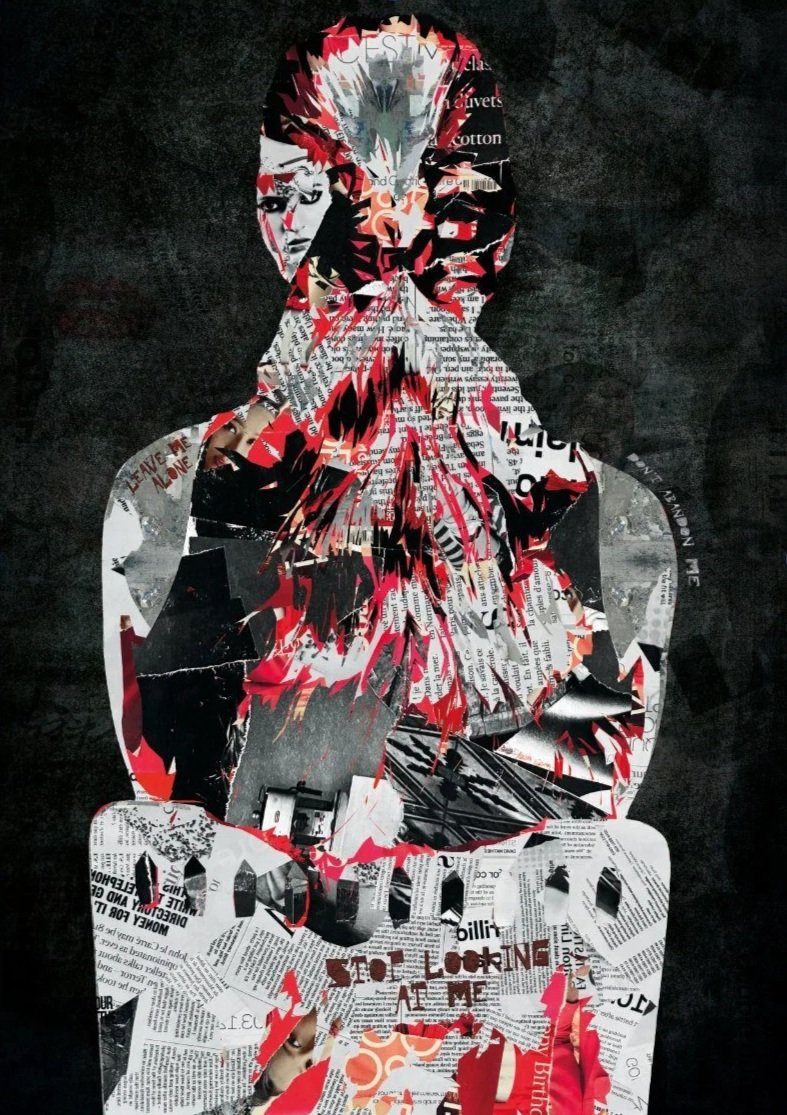
Isolation / Isolation of Being Seen
This response explores the tension between being visible and feeling alone. It uses image, texture and typographic pressure to suggest exposure without connection.
The work responds to the idea that visibility does not always mean being understood. It holds the discomfort of being seen, watched or present, while still feeling separated from genuine recognition.
-
![]()
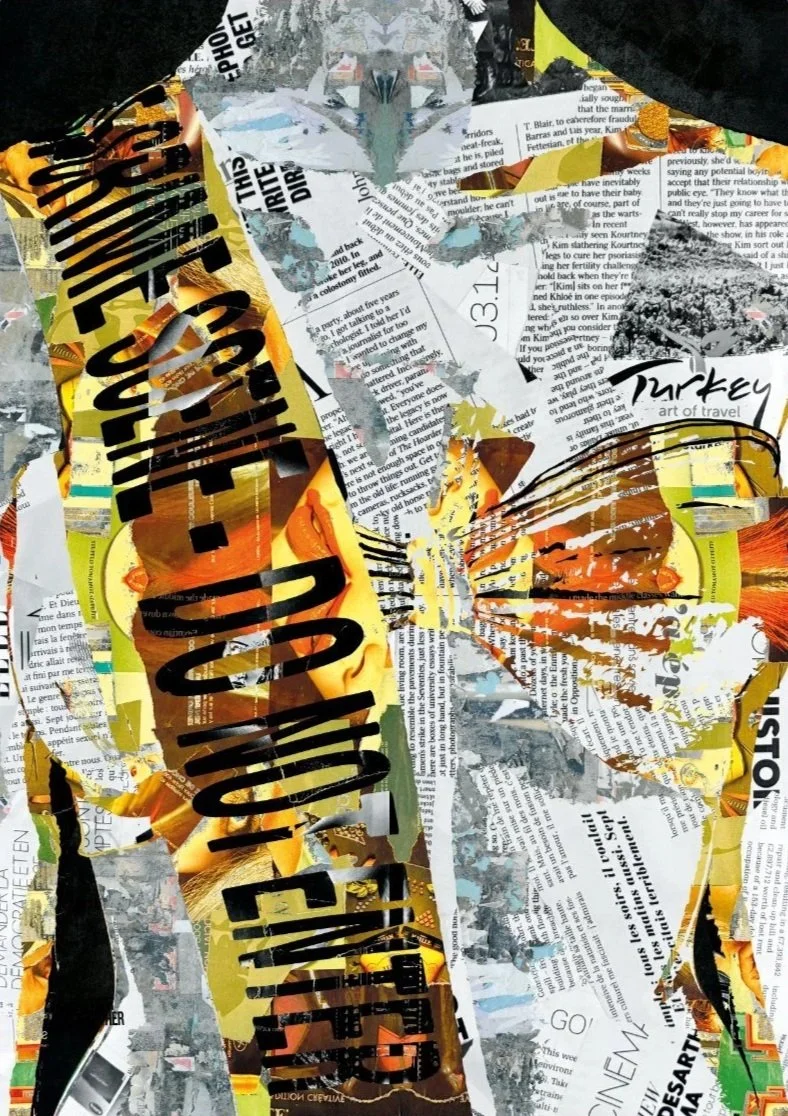
Objectification / For Display Only
This response examines the body as something looked at, arranged or reduced.
The visual language uses photography, collage and controlled composition to create distance between the person and the viewer. The work questions what happens when someone is treated as a surface, object or display rather than as a full person with voice and agency.
-
![A collage-style poster featuring portraits of three women made from cut-out magazine and newspaper clippings, with the text "New Western" written above.]()
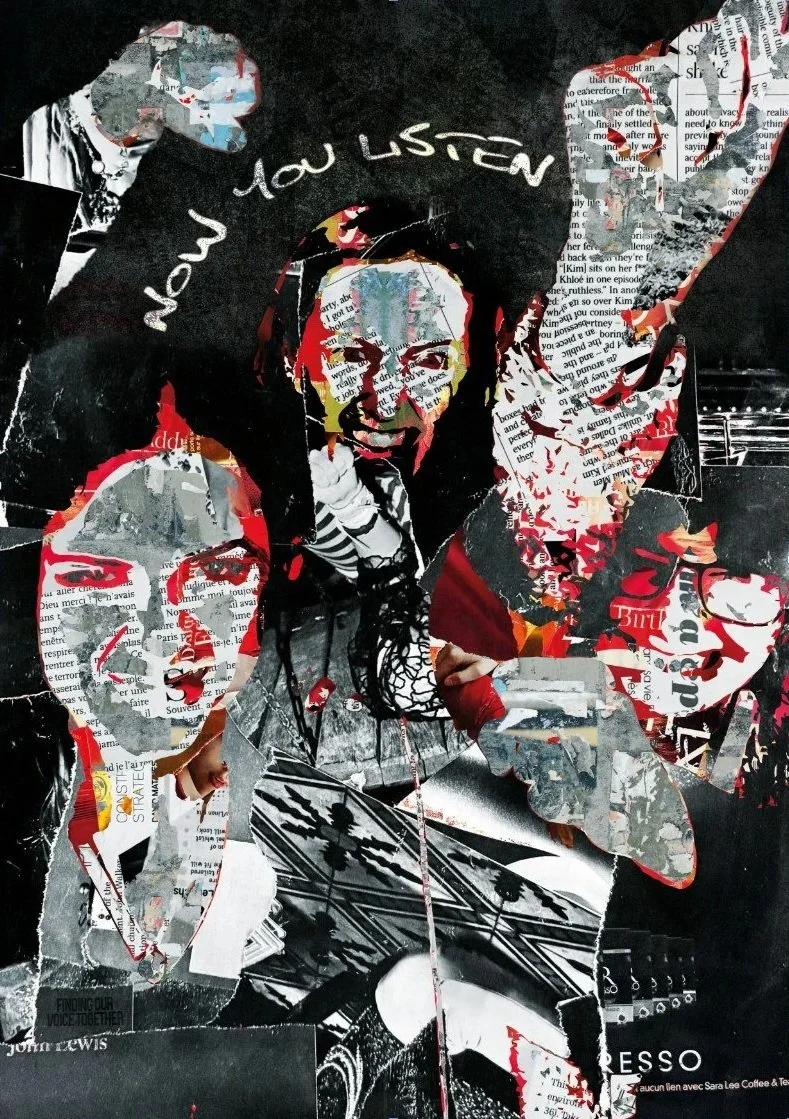
Protest / Now You Listen
This response is the most direct of the four.
It uses the visual language of protest to shift from silence into confrontation. The work carries the project’s central movement: from being muted, softened or overlooked, towards a statement that refuses to stay quiet.
Project Context
The Unmute Project was developed as a self-directed BA Fine Art professional project and dissertation practice.
It is presented here as portfolio evidence of Fine Art practice, typographic visual communication, participant-informed creative development, exhibition presentation and public-facing visual outcomes.